Quick answer: To patch jeans, wash and dry them, trim loose threads, then choose a patch or denim scrap that extends about 2 to 3 cm (around 1 inch) beyond the damage. Position it, attach it with iron-on adhesive, stitching or both, and stitch around the edges to reinforce it. Small holes can be covered with an iron-on or embroidered patch. Larger holes and thin denim need a fabric backing on the inside plus secure stitching.
Patching jeans means covering, reinforcing or repairing damaged denim with a piece of fabric or a ready-made patch. It is one of the simplest ways to keep a favourite pair in use, and it needs far less skill than most people expect.
The best method depends on four things: the size of the hole, where it is, how worn the surrounding denim is, and how you want the finished repair to look. This guide covers the basic technique first, then looks at four popular patch types: iron-on, embroidered, PVC and chenille.
Covering, Reinforcing, Repairing or customising: What Is the Difference?
These four jobs are often mixed up, and the difference decides which patch you need.
- Covering a hole: hiding a small hole or worn spot. A patch on top is often enough.
- Reinforcing weak denim: strengthening a thin area before it tears. This needs fabric support and stitching, not just a decorative patch.
- Repairing a structural tear: closing a larger rip, especially at the knee, crotch or seams. This needs a denim backing on the inside and secure stitching.
- Decorative customization: adding a patch purely for looks. The denim underneath does not need to be damaged.
No patch type automatically gives a permanent structural repair. A decorative patch can hide damage while the denim underneath keeps wearing away, which is why larger repairs need backing.
Why Do Jeans Need Patching?
Denim wears out in predictable places: knees, thighs, the crotch, pocket corners and hems. Friction, stretching and repeated washing thin the fibres until a hole forms.
Repairing jeans is a simple way to reduce clothing waste and make your favourite denim last longer. A patch can also give old jeans a fresh look and add a personal touch to your style.
If you are from canada looking for custom patch designs, explore the options available at Stitch Patches Canada .
What Do You Need to Patch Jeans?
You do not need a full sewing kit. Depending on your method, gather:
- Your chosen patch, or a scrap of denim or sturdy cotton for backing
- A household iron and a thin cotton pressing cloth (for iron-on patches)
- Needle and strong thread in a matching or contrasting colour; a thimble helps with thick denim
- Sharp scissors
- Pins or clips, or fabric tape
- Tailor’s chalk or a washable marker
- A rolled towel or small ironing board to slide inside the leg
How to Patch Jeans Step by Step
This method works for most holes and worn patches. Specific patch types are covered in the sections that follow.
Step 1: Prepare the Damaged Area
Wash and dry the jeans first, so the denim is clean and has already shrunk. Trim loose threads around the hole with sharp scissors. Leave a clean, flat edge, as a patch sits better on tidy denim.
Measure the damage. If the denim around the hole is thin or fraying, the repair area is larger than the hole itself, so measure the whole weak area.
Step 2: Choose the Right Patch
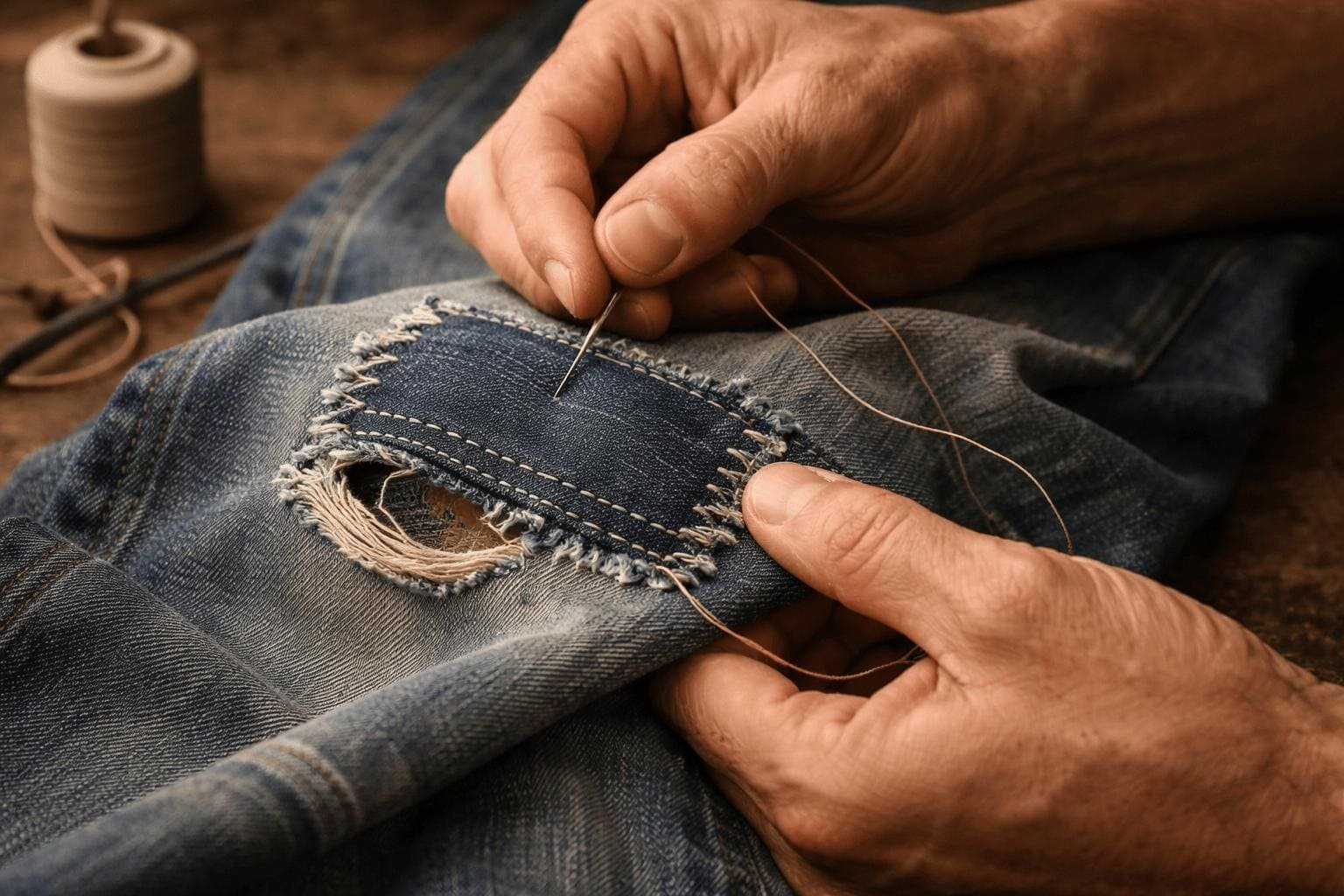
Pick a patch (or backing fabric) that overlaps the damage by at least 2 to 3 cm (about 1 inch) on every side. For a hole that is open rather than just thin, a denim or cotton backing patch on the inside is the strongest foundation, with a decorative patch added on top if you want one.
Step 3: Position the Patch
Turn the jeans inside out for a backing patch, or leave them the right way round for a patch that sits on the surface. Slide a rolled towel inside the leg so the layers lie flat. Pin or clip the patch in place, and mark the edges with chalk so you can check it has not shifted.
Step 4: Attach the Patch
Attach it using the method that suits the patch: iron-on adhesive, hand or machine stitching, or both. Follow the patch maker’s instructions for any adhesive. Details for each type are below.
Step 5: Reinforce the Repair
Even with iron-on adhesive, stitching around the edge makes a repair far more secure, especially on areas that bend and stretch. A simple running stitch, whip stitch or zigzag stitch is fine. For a hole with a backing patch, stitch back and forth across the hole as well, so the backing and the jeans act as one piece.
How to Patch Jeans with an Iron-On Patch
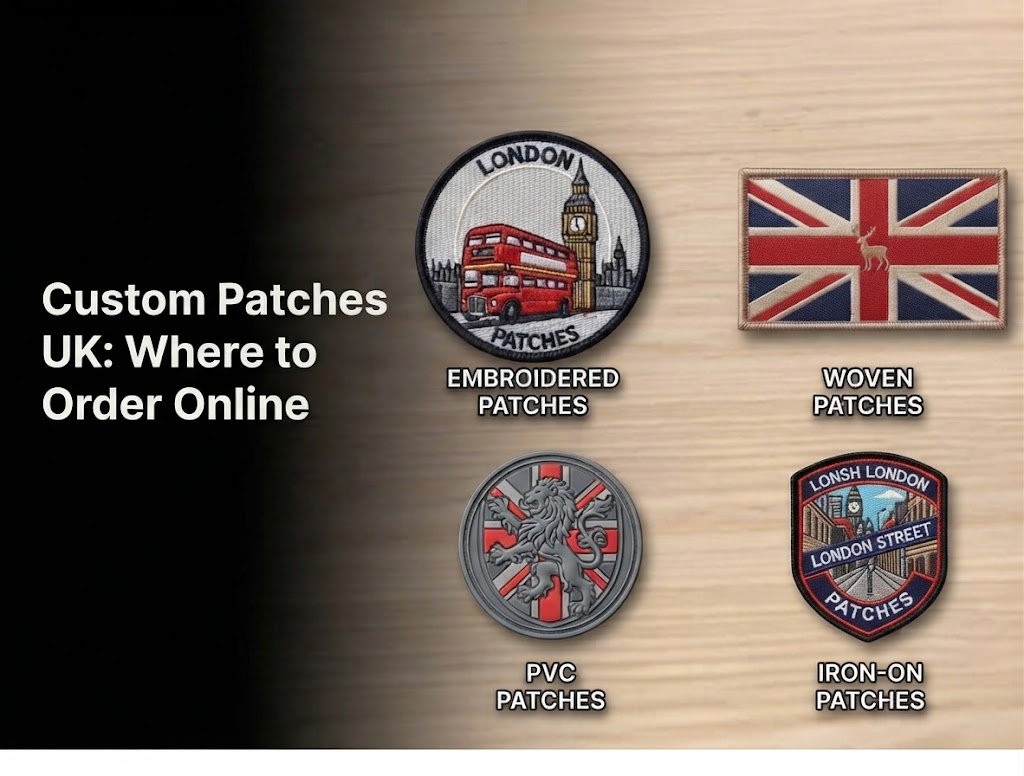
What are iron-on patches? Iron-on patches have a heat-activated adhesive layer on the back. When heated and pressed, the adhesive softens and bonds with the denim fibers as it cools. Stitch Patches UK notes that iron-on backing is quick to apply with a household iron or heat press and works best on cotton and denim.
Do they cover holes? Yes, for small holes and worn spots. They are quick, and need no sewing to get started.
- Turn off steam, and set the iron according to the patch instructions. Adhesives and fabrics vary, so there is no single correct temperature or timing.
- Lay the jeans flat on a firm, heat-safe surface, with a rolled towel or board inside the leg.
- Place the patch over the damage, adhesive side down, and cover it with a thin pressing cloth.
- Press firmly and hold the iron in place for the time stated in the instructions. Do not slide it around.
- Turn the jeans inside out and press the back of the repair if the instructions allow, to help the adhesive bond through the fibres.
- Let the patch cool completely before moving or wearing the jeans.
How do you check it is secure? Once cool, gently try to lift the edges with a fingernail. If a corner lifts, press it again. Even if it feels firm, stitch around the edge for any area that flexes, such as knees.
Limitations: Iron-on adhesive alone may not hold a large hole closed. Stretchy denim, heavy washing and high-movement areas can loosen it over time. For anything beyond a small hole, add a fabric backing and stitching.
How to Repair Jeans with Embroidered Patches
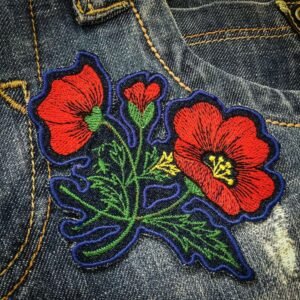
Can embroidered patches cover holes in jeans? Yes. Embroidered patches are made from thread stitched onto a fabric base, so they cover damage and add decoration at the same time. They suit small to medium holes, worn patches, stains and areas you simply want to personalize.
Sew-on or iron-on? Embroidered patches come with different backings. According to the supplier’s own guidance, iron-on is quick, sew-on is the most durable choice for items washed often, and Velcro lets you swap patches. For jeans, sewing the edge, even on an iron-on patch, is the more reliable option.
How to attach one securely:
- Position the patch and pin it in place.
- If the hole is open, stitch a denim backing patch on the inside first.
- Sew around the patch edge with small, even stitches in a matching thread.
- Finish with a few stitches through the middle of larger patches, if the design allows.
Design options: Embroidery works best with solid shapes, clear outlines and a limited number of colours. Custom embroidered patches can be made in flat embroidery for a smooth finish or 3D puff for a raised look, with your own artwork, lettering or logo. The sizing and design guidance on that page is worth reading before you plan a patch for a specific hole.
Limitations: An embroidered patch is not a structural repair by itself. If the denim underneath is weak, the patch covers the problem rather than solving it.
Can You Use PVC Patches to Repair Jeans?
What are PVC patches? PVC patches are made by moulding coloured PVC into a raised design. They have a rubbery, sculpted look, unlike the thread texture of embroidery, and are known for being waterproof.
How do they differ from embroidered patches? Embroidered patches are soft and fabric-based. Custom PVC patches are rigid and smooth, with crisp edges and strong colour. They suit bold logos, badges and a modern, graphic look.

Can you use them on jeans? Yes, mainly as decoration or to cover a small, stable damaged spot. PVC patches are not automatically iron-on. The supplier lists sew-on, Velcro and adhesive options, and says sewing is the strongest way to keep a patch in place. Check whic
h backing your patch has and follow the maker’s instructions.
Heat caution: PVC is a plastic, so avoid putting a hot iron on it unless the maker says it is designed for heat application.
Limitations:
- A PVC patch does not flex like denim, so it can feel stiff over a knee or other high-movement area.
- It will not hold a large hole or weak denim together. Stitch a denim backing inside first.
- Sewing is only possible where the patch design or backing allows it. Ask the supplier if you are unsure.
How to Use Chenille Patches on Jeans
What are chenille patches? Chenille patches are made by stitching loops of thick chenille yarn onto a felt fabric base. The result is soft, raised and towel-like, with a vintage, varsity look. Custom chenille patches work best for bold letters, numbers and simple shapes, because the thick yarn does not suit tiny details.

Can they cover damage on jeans? Yes. A chenille patch can cover a damaged section, and its thickness can hide a worn spot well. It works particularly well as a decorative cover for a stain, a small hole or a frayed patch on a jacket-style denim piece.
How to attach one: The supplier lists heat-seal, sticky, Velcro and plain backings, and says sewing is the lasting method while iron-on is a quicker option. For jeans, sew it on, especially if the jeans will be washed often.
Limitations: Chenille patches are thick, heavier and stiffer than embroidered patches. They are poor choices for structural repairs and for areas that bend constantly. They suit decoration and covering more than strengthening.
How to Patch a Hole in the Knee of Jeans
Knees bend, stretch and rub constantly, so they are the hardest place to patch. The best patch for knee holes is a denim or sturdy cotton backing stitched on the inside, optionally with a decorative patch on top.
- Turn the jeans inside out and trim loose threads.
- Cut a denim patch at least 2 to 3 cm (about 1 inch) larger than the damage on every side.
- Pin it inside, then stitch around the edges and across the hole through both layers. Use a thimble and strong thread. A narrow leg may need hand stitching, or turning the leg over a sewing machine’s free arm.
- Add an embroidered or chenille patch on the outside for decoration, sewn on at the edges.
- Avoid rigid patches, such as PVC, directly over the bend of the knee.
How to Patch Jeans Without Sewing
You can patch jeans without sewing using iron-on patches, fabric glue made for textiles, or iron-on mending tape. These work best on small holes and low-stress areas.
- Use an iron-on patch following the steps above.
- Place an iron-on denim or cotton patch on the inside of the hole to close it, then add a decorative patch on top.
- Check the product says it is suitable for denim and follow its washing instructions.
No-sew repairs are quick but generally less secure than stitched ones. For knees, thighs and seams, stitching is the safer choice.
Which Patch Is Best for Repairing Jeans?
There is no single best option. Choose by the job.
|
Patch type |
Appearance |
Attachment method |
Best use |
Repair considerations |
|---|---|---|---|---|
|
Iron-on patch |
Varies by design; flat fabric or embroidered |
Heat-activated adhesive, ideally stitched at the edge |
Small holes, quick fixes, worn spots |
Follow adhesive instructions; stitch high-movement areas |
|
Embroidered patch |
Thread on fabric; flat or raised 3D puff |
Sew-on, iron-on or Velcro backing |
Covering and decorating small to medium damage |
Not structural on its own; sew edges for durability |
|
PVC patch |
Raised, rubbery, glossy, waterproof |
Sew-on, Velcro or adhesive, depending on the patch |
Decorative covering of small, stable areas |
Stiff; avoid heat; needs fabric backing over weak denim |
|
Chenille patch |
Soft, thick, towel-like, vintage |
Sewing is the lasting method; iron-on is quicker |
Letters, bold shapes, decorative covering |
Heavy and stiff; poor for structural repair |
|
Denim backing patch |
Plain denim, mostly hidden on the inside |
Stitching, sometimes with iron-on adhesive |
Larger holes and knees |
The strongest foundation for a real repair |
Common Mistakes to Avoid When Patching Jeans
- Choosing a patch that is too small. Overlap the damage by 2 to 3 cm (about 1 inch) all round.
- Ignoring the care instructions. Adhesive and fabric instructions vary, so follow them rather than guessing a temperature.
- Putting a decorative patch over a large hole with nothing behind it. Add a denim backing.
- Relying on adhesive alone. Stitch the edges on knees and other moving areas.
- Moving the jeans before the patch cools. Wait until it has cooled fully.
- Applying heat directly to PVC. Check the maker’s instructions first.
- Patching over very thin denim. If the surrounding fabric is worn, extend the repair area beyond the visible hole.
How to Make a Jean Patch Last Longer
- Stitch around the patch edge, even if it is iron-on.
- Use strong thread, such as a thread made for denim or upholstery.
- Wash patched jeans according to the garment care label and the patch instructions. The embroidered patches page suggests turning garments inside out and using a cool, gentle cycle, and avoiding tumble drying where you can.
- Repair worn areas early, before a hole forms.
- Check patches now and then and re-stitch any loose edges.
For more beginner mending ideas, the <a href=”https://www.loveyourclothes.org.uk/”>Love Your Clothes</a> UK campaign offers clothes repair guidance, and <a href=”https://goodonyou.eco/mend-your-clothes/”>Good On You</a> explains Boro-style patching, which layers fabric scraps with rows of running stitch.
Frequently Asked Questions
Can iron-on patches cover holes in jeans?
Yes, iron-on patches can cover small holes and worn areas. For larger holes, add a denim backing inside and stitch around the patch edge so the repair does not depend on adhesive alone.
Can you repair ripped jeans with embroidered patches?
Yes, for small to medium rips. Embroidered patches cover and decorate damage, but they do not strengthen weak denim by themselves. Stitching a backing patch on the inside gives a more lasting repair.
Can PVC patches be used on denim?
Yes, mostly for decoration or covering a small damaged spot. Attachment depends on the backing: sew-on, Velcro or adhesive. Avoid direct heat unless the maker confirms the patch is designed for it.
Are chenille patches suitable for jeans?
They can be, for decoration and covering. Chenille patches are thick and stiff, so they are better on low-flex areas, and sewing them on is the longer-lasting option.
How do you patch jeans without sewing?
Use an iron-on patch, textile fabric glue or iron-on mending tape, following the product instructions. These suit small holes in low-stress areas and are generally less secure than stitched repairs.
What is the best patch for knee holes?
A denim or sturdy cotton backing stitched on the inside, with an optional decorative patch on top. Avoid rigid patches directly over the knee bend.
Do patches make jeans stronger?
Only if they add fabric support behind the damaged area and are stitched securely. A purely decorative patch covers damage but does not necessarily strengthen the denim.
Can you put a patch over a large hole in jeans?
Yes, but a patch alone is not enough. Stitch a denim backing inside, extending past the hole by 2 to 3 cm (about 1 inch), then add a patch on top if you want one.
Can you wash jeans after applying a patch?
Yes, in general. Follow the garment care label and the patch instructions, wash inside out on a cool, gentle cycle, and avoid tumble drying where possible. Stitched patches tend to hold up better than adhesive-only ones.
Final Thoughts
Patching jeans comes down to matching the repair to the damage. Small holes and worn spots can be covered with iron-on or embroidered patches. Larger holes and knees need a denim backing and secure stitching. PVC and chenille patches add texture and style, but work best as decoration over sound denim.
If you want a patch made to your own design, Stitch Patches UK makes custom embroidered, PVC and chenille patches, with a range of backing options. Tell them what the patch is going on and they can advise on a suitable backing and style.