Quick answer: To sew on a patch, mark where it should go, hold it in place with pins, temporary tacking stitches or a washable glue stick, then stitch around the edge using thread that matches the patch border. Use a whip stitch or blanket stitch by hand, or a straight stitch on a sewing machine, and finish with a few secure stitches on the inside of the garment.
Key takeaways
- Match the thread to the patch border so the stitches blend in.
- Thick patches are hard to pin, so a washable glue stick is an easy way to hold one still while you sew.
- Hand sewing gives more control on curved, stretchy or awkward items. A machine is quicker on flat fabric.
- Always secure the thread at the start and end, or the patch will work loose.
- Stitching around an iron-on patch adds extra hold.
What Is a Sew-On Patch?
A sew-on patch is a fabric badge, usually embroidered, made to be attached with thread rather than heat or glue. The same method works for patches you cut from spare fabric to cover a worn area, such as elbow patches. Check the packaging first, as some patches are designed to be ironed on instead.
What You Need
- The patch and the garment or bag
- A sharp hand-sewing needle, or a machine needle suited to the fabric (for example, a denim needle for jeans)
- Strong, all-purpose thread in a colour that matches the patch border
- Washable glue stick, pins or sewing clips
- Small scissors
- Erasable pen or tailor’s chalk
- A thimble (optional, helpful on thick fabric)
How to Sew On a Patch by Hand
Hand sewing suits small patches, curved surfaces, hats, bags and thick items.
- Prepare the item. Wash and dry it first so it doesn’t shrink after the patch is attached, then press it flat.
- Position the patch. Try the garment on or lay it flat, mark the spot, and check the patch is straight before fixing it.
- Hold it in place. Dab a washable glue stick on the back and press the patch down. Pins work on thin patches, but glue is far easier on thick ones. Glue is only temporary, so you still need to stitch.
- Thread the needle. Cut about an arm’s length of thread to avoid tangles, and knot the end.
- Start from the inside. Bring the needle up from the back of the garment, just beside the patch edge, so the knot stays hidden.
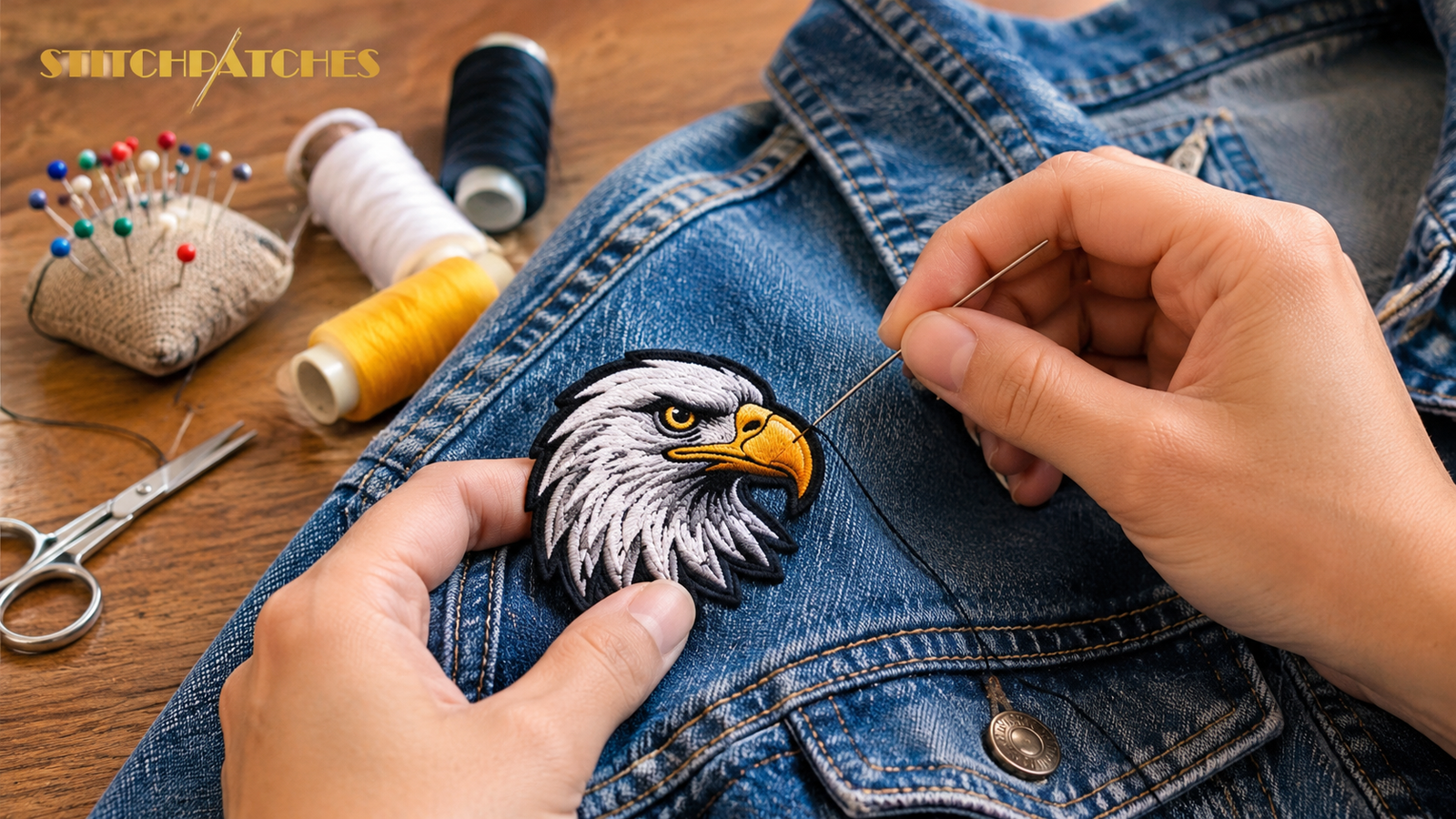
- Stitch around the edge. For a whip stitch, push the needle down through the patch just inside its border, then bring it up through the garment beside the edge. Repeat in small, even stitches all the way around. For a blanket stitch, loop the thread under the needle tip before pulling through. This creates a decorative, secure edge.
- Keep the tension snug, not tight. Pulling too hard puckers the fabric.
- Finish securely. Take the needle to the back, sew a few small stitches over each other, then trim the thread. If you run out, start a new length where the last one ended.
How to Sew On a Patch With a Sewing Machine
A machine is quicker on flat items such as tote bags, backpacks and jackets.
- Fix the patch with a glue stick or pins.
- Load the top thread to match the patch border and the bobbin thread to match the garment.
- Use a straight stitch and sew slowly, close to the patch edge. Pivot at corners with the needle down and curve gently around curves.
- Backstitch (sew a few stitches in reverse) at the start and end.
- Pull the threads to the back, knot them and trim.
Tip: For sleeves, cuffs or bags, remove the machine’s extension table if it has one. This exposes the narrow “free arm”, which lets you slide the item around the needle.
Which Stitch Should You Use?
| Stitch | Best for | Look | Difficulty |
|---|---|---|---|
| Whip stitch (hand) | Most embroidered patches | Small, neat stitches over the edge | Easy |
| Blanket stitch (hand) | Fabric patches, decorative edges | Visible looped border | Moderate |
| Straight stitch (machine) | Flat, sturdy items | Clean line near the edge | Easy to moderate |
How to Sew On a Patch on Different Items
Jeans and Jackets
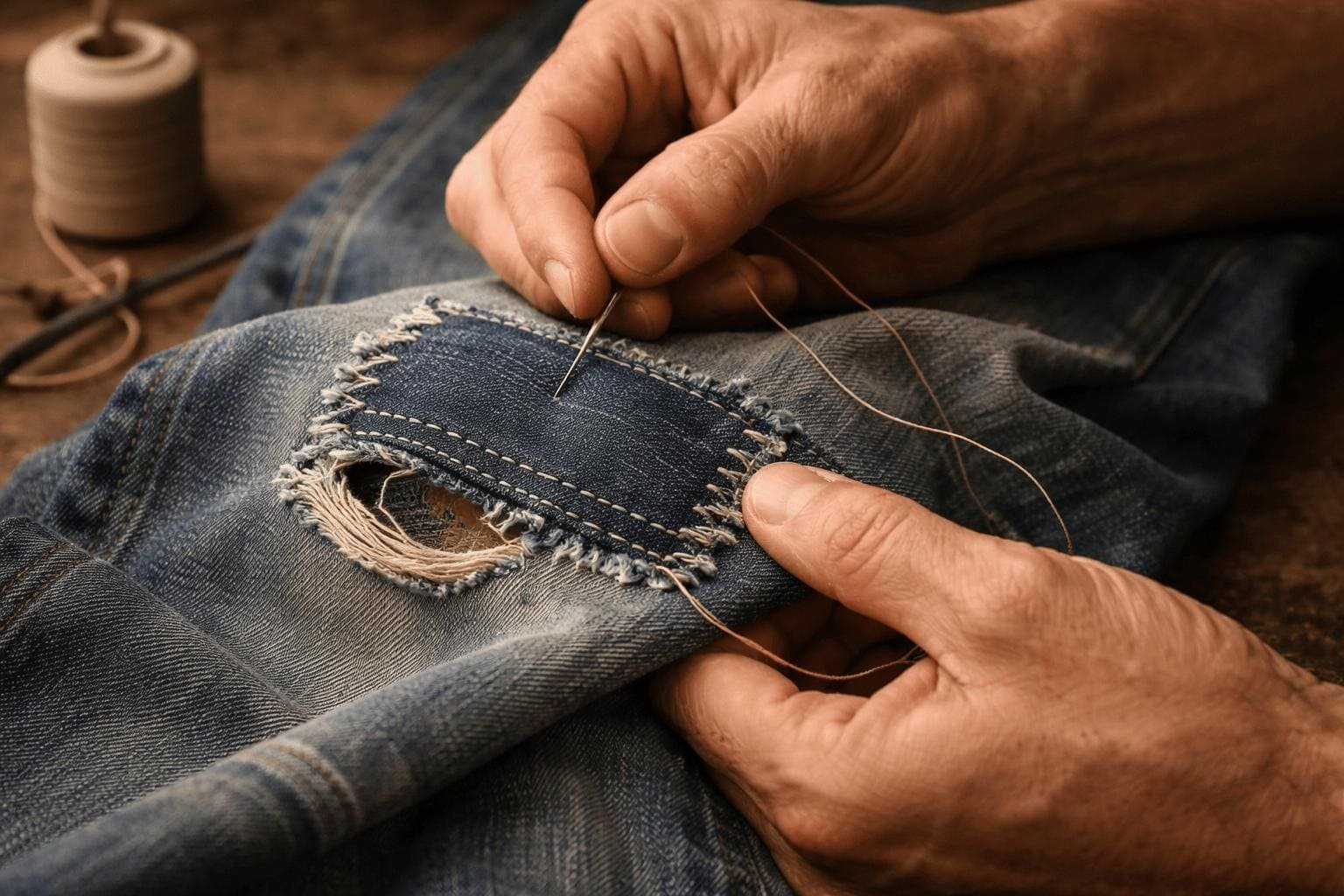
Denim and thick seams are tough on needles. By hand, use a thimble. By machine, choose a denim needle and sew slowly. If you are covering a hole rather than adding a badge, see our guide on how to patch jeans.
Hats and Beanies
Caps are curved and stiff, so hand sewing is easier. Knitted beanies stretch, so use small, loose stitches that move with the fabric and avoid pulling the thread tight.
Leather
Pins leave permanent holes, so use clips or a glue stick instead, and test your stitching in a hidden spot first.
T-Shirts and Hoodies
Use small stitches and light tension so the fabric can stretch. On a machine, use a stretch or ballpoint needle.
Common Mistakes to Avoid
- Pulling the thread too tight, which puckers the fabric around the patch.
- Stitching too far from the edge, which leaves the border lifting.
- Skipping the knot or backstitch, so the stitches unravel.
- Relying on glue or heat alone instead of stitching.
- Using mismatched thread by accident. Contrasting thread works only when you want the stitching to be part of the look.
How to Wash a Garment With a Sewn-On Patch
Turn the garment inside out, wash it on a cold, gentle cycle and air-dry where possible. This helps protect both the stitching and the patch.
FAQs
Can you sew on a patch without a sewing machine?
Yes. A needle, matching thread and a whip stitch are enough. It takes longer than a machine but gives you more control on curves and small items.
Is it better to sew or iron on a patch?
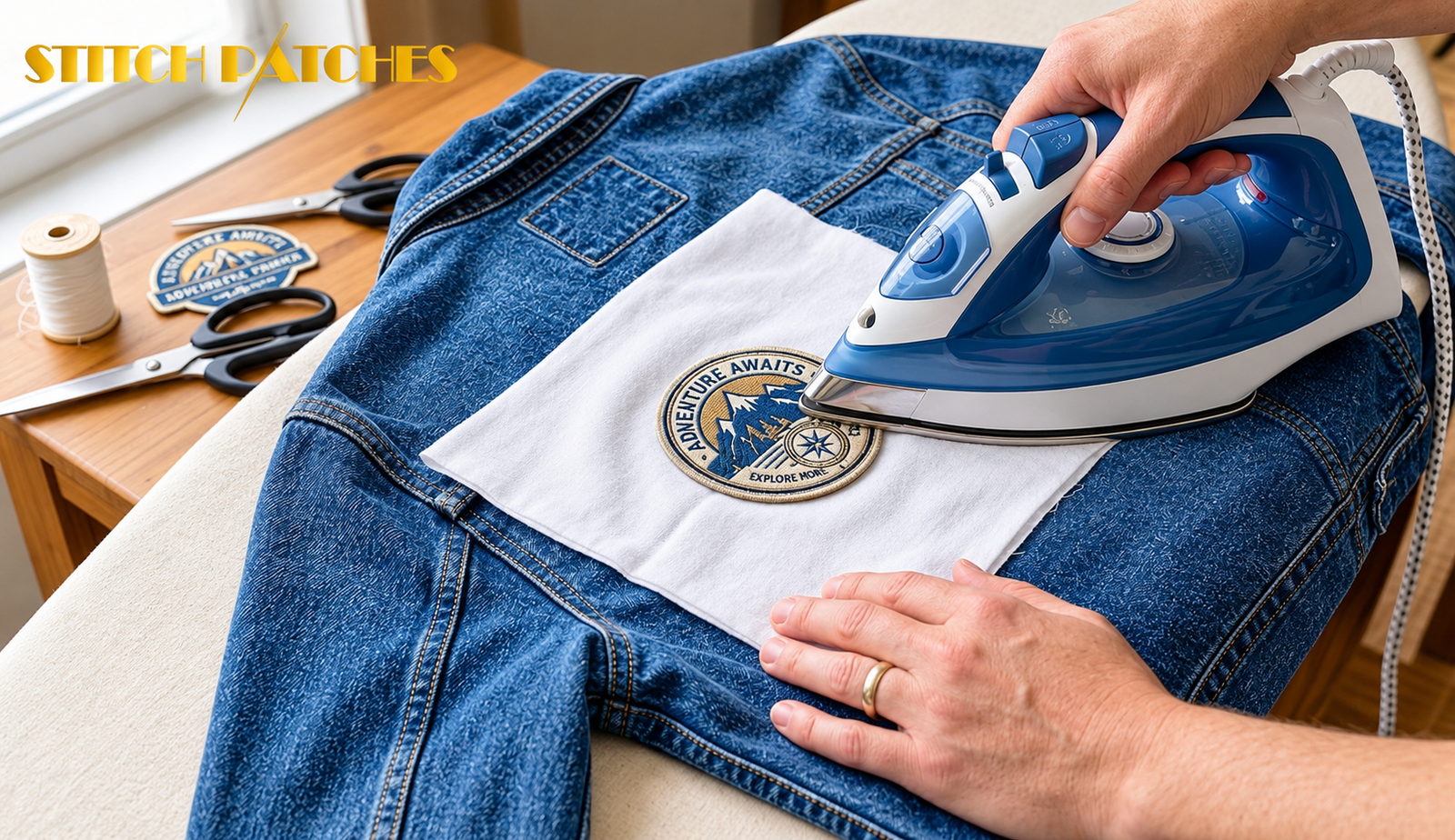
Sewing is more secure, especially on thick fabric or items you wash often. Ironing is quicker on flat, heat-safe fabric, and adding stitches around the edge helps it hold. Our guide to ironing on patches explains how.
What thread should I use to sew on a patch?
Use strong, all-purpose thread in a colour that matches the patch border. Choose a contrasting colour only if you want visible stitching.
How do you sew on a patch so the stitches don’t show?
Match the thread to the patch border, keep stitches small and close to the edge, and use a whip stitch so the thread sits over the border.
How do you sew a patch over a hole?
Choose a patch that extends beyond the hole on every side, fix it in place and stitch all the way around the edge.
Final Thoughts
Sewing on a patch is a beginner-friendly job. Position it carefully, hold it in place, stitch with matching thread and secure the ends. If you want a custom design made to be stitched on, browse our sew-on patches.